

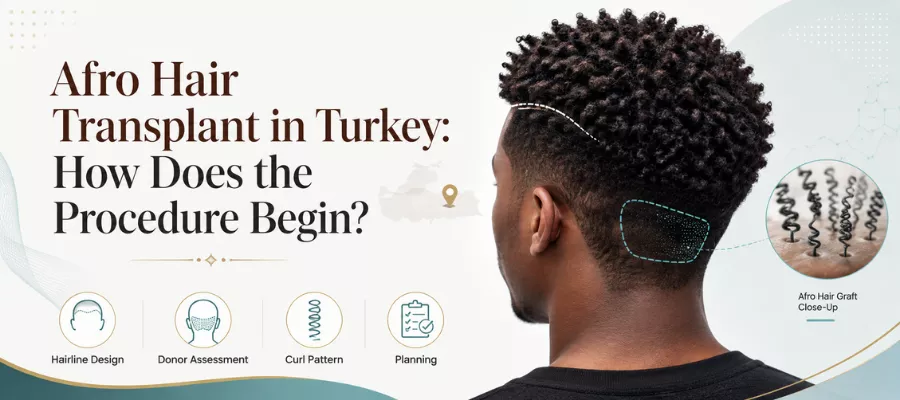
An afro hair transplant in Turkey begins with much more than simply deciding how many grafts should be moved from one area of the scalp to another. Afro-textured hair has a distinctive curl pattern that often continues beneath the skin, which means the extraction and implantation stages require careful planning. At Hair in Istanbul, the process starts with an individual assessment of the donor area, hair density, curl pattern, scalp condition, degree of hair loss, and the patient’s expectations. The aim is to create a plan that respects the natural characteristics of Afro hair rather than applying a standard hair transplant approach to every patient.
During the first consultation, photographs and scalp analysis may be used to estimate the available donor capacity and determine which areas should receive priority. Because curly hair can provide strong visual coverage with fewer grafts than very straight hair in some cases, graft numbers should not be evaluated in isolation. A successful afro hair transplant in Turkey depends on how well the surgeon understands hair direction, curl formation, follicle depth, and the way transplanted hair will frame the face after growth.
| Initial Assessment | What Is Evaluated | Why It Matters |
|---|---|---|
| Donor area | Density, follicle strength, curl pattern | Helps determine safe graft availability |
| Hair loss pattern | Receding hairline, temples, crown, diffuse thinning | Guides treatment priorities |
| Hair texture | Curl tightness and shaft thickness | Influences extraction and implantation technique |
| Hairline design | Facial proportions and natural growth pattern | Supports a balanced, realistic result |
| Patient expectations | Desired density and style | Helps create a personalized treatment plan |
Why Does Afro Hair Require a Different Technique?
The main difference in an afro hair transplant in Turkey comes from the structure of the follicle itself. Afro-textured hair may appear tightly curled above the scalp, but the follicle underneath can also follow a curved or C-shaped path. During FUE extraction, this makes precise punch positioning especially important. If the angle or depth is not correctly estimated, the risk of transecting the follicle may increase. For this reason, experience with curly and Afro-textured hair is particularly valuable during donor harvesting.
Afro hair also has characteristics that can work in the patient’s favor. Thick, curly strands often create a strong impression of volume once they begin growing in the recipient area. This means careful graft placement may achieve good visual density without excessively harvesting the donor region. At Hair in Istanbul, the planning of an afro hair transplant in Turkey focuses on preserving donor balance while creating a natural pattern that works with the patient’s existing curls.
| Afro Hair Characteristic | Technical Consideration | Potential Advantage |
|---|---|---|
| Curved follicles | Requires careful extraction angle | Better preservation with experienced handling |
| Tight curl pattern | Implantation direction must be planned precisely | Can create strong visual fullness |
| Thick hair shafts | Each strand may cover more scalp | May improve perceived density |
| Sensitive donor planning | Overharvesting should be avoided | Helps maintain a natural donor appearance |
| Variable curl direction | Hairline placement requires customization | Supports a more authentic result |
What Are the Main Stages of the Procedure?
An afro hair transplant in Turkey usually follows a structured sequence, although the exact steps may vary according to the patient’s hair type, donor capacity, and chosen technique. Careful planning at each stage is particularly important for protecting curved follicles and creating a natural final appearance.
- Consultation and analysis: The scalp, donor area, curl pattern, and hair loss are evaluated in detail.
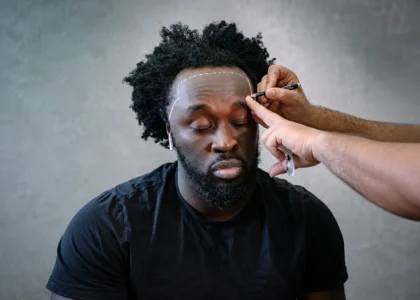
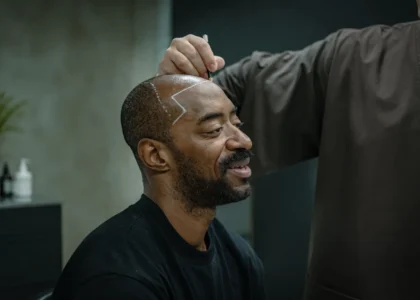
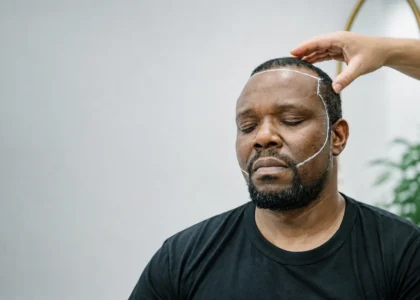
- Hairline planning: The new hairline is designed according to facial proportions, age, existing hair, and future hair-loss risk.
- Donor preparation: The extraction zone is prepared so that follicular direction can be followed as accurately as possible.
- Local anesthesia: The donor and recipient areas are numbed before extraction and implantation.
- Graft extraction: Individual follicular units are removed with attention to the curved structure of Afro hair.
- Graft preparation: Extracted follicles are examined and preserved until implantation.
- Recipient site creation or direct implantation: Follicles are positioned according to the planned direction, angle, and density.
- Postoperative care: The patient receives instructions about washing, sleeping, medication, and protecting the transplanted area.
How Is the Donor Area Managed?
Donor management is a central part of an afro hair transplant in Turkey because a good result should not come at the expense of visible thinning at the back or sides of the head. Before extraction, the medical team assesses how many grafts can be safely removed while keeping the donor area visually balanced. Hair shaft thickness, follicular density, the number of hairs in each graft, and any signs of donor miniaturization are considered.
Afro-textured hair can sometimes create the appearance of greater donor density because curls overlap and occupy more visual space. However, this should not encourage aggressive extraction. Hair in Istanbul approaches donor planning conservatively, with attention to both the current procedure and possible future needs. Preserving donor resources is particularly important for younger patients whose hair loss may continue over time.
How Is the Hairline Designed?
Hairline design can determine whether an afro hair transplant in Turkey looks natural or noticeably surgical. A natural hairline is rarely perfectly straight. It usually contains subtle irregularities, gradual density transitions, and a direction that matches the patient’s existing hair. In Afro-textured hair, the curl pattern must also be considered because the visual shape of the hairline changes as transplanted strands grow and begin to curl.
At Hair in Istanbul, hairline planning is approached as a personalized stage rather than a standard template. Facial structure, forehead height, age, existing temple points, future hair-loss pattern, and preferred hairstyle may all influence the final design. The objective is not simply to lower the hairline as much as possible, but to create a result that remains natural as the patient ages.
Is FUE Suitable for Afro Hair?
FUE can be used successfully for an afro hair transplant in Turkey, but the technical demands are greater than they may be with straight follicles. During FUE, follicular units are extracted individually using small punches. Because Afro follicles may curve beneath the skin, the practitioner must anticipate the path of the follicle instead of relying only on the direction visible above the scalp.
Experience is therefore a major factor. A carefully performed FUE procedure can help minimize linear scarring and allow grafts to be distributed across the donor area. The suitability of FUE should still be determined individually, as follicle curvature differs from one person to another. In some cases, the medical team may modify the extraction technique after examining the first grafts.
How Are Grafts Implanted Naturally?
The implantation stage of an afro hair transplant in Turkey requires detailed control of direction, angle, and distribution. If follicles are placed too upright or in a direction that does not match surrounding hair, the result may look unnatural once the curls develop. The frontal area often requires particularly fine planning because this is where even small differences in angle can be noticeable.
Density is also created strategically rather than uniformly. The hairline may receive softer placement, while areas behind it can contain stronger multi-hair grafts for volume. Hair in Istanbul focuses on balancing graft survival with natural distribution so that the transplanted area does not simply look dense but also behaves naturally when the patient wears different hairstyles.
What Happens Immediately After Surgery?
After an afro hair transplant in Turkey, mild redness, swelling, sensitivity, and small crusts around the transplanted grafts can occur. These changes are usually part of the early healing process. The donor area may also feel tender during the first few days. Patients are given specific instructions about sleeping position, washing, physical activity, and protecting the scalp from rubbing or accidental contact.
The early period requires patience because transplanted grafts are delicate while they settle into the recipient area. Hair in Istanbul places emphasis on communication during this stage because clear postoperative guidance can make the recovery process easier to understand. Patient satisfaction is often closely connected not only to the eventual growth but also to how informed and supported patients feel throughout recovery.
What Should Patients Avoid After the Procedure?
The first days following an afro hair transplant in Turkey are especially important for protecting newly implanted follicles. Patients should follow the clinic’s individual postoperative instructions rather than relying on general advice found online.
- Avoid scratching or rubbing the transplanted area.
- Do not wear tight hats unless the medical team approves them.
- Avoid intense exercise during the initial recovery period.
- Do not expose the scalp to strong direct sunlight too soon.
- Avoid sleeping in a position that places pressure on the recipient area.
- Do not use ordinary shampoo before the recommended first-wash schedule.
- Avoid alcohol or smoking if the medical team advises doing so.
- Do not pick at crusts, as they should be allowed to loosen according to the washing protocol.
When Does New Hair Start Growing?
The growth process after an afro hair transplant in Turkey is gradual. Some transplanted hairs commonly shed during the first several weeks while the follicles remain beneath the scalp. This temporary shedding can concern patients who are not expecting it, but it is usually part of the normal transplant cycle. New growth generally becomes more noticeable over the following months.
Afro hair may need additional time before its full texture and curl pattern become obvious because new strands initially emerge short and fine. As the hair becomes longer and stronger, the visual density can continue to improve. Final assessment is therefore not made during the early months. Hair transplant growth should be judged over a longer period, with photographs taken under similar lighting often providing a more useful comparison.
Why Is Follow-Up Important?
Follow-up after an afro hair transplant in Turkey gives the clinic an opportunity to monitor healing, donor recovery, transplanted growth, and any questions that arise during the process. Hair transplant patients often experience different concerns at different stages, from initial swelling to shedding and later questions about density. Reliable follow-up helps patients understand which changes are expected and which should be evaluated.
For Hair in Istanbul, the patient experience extends beyond the day of surgery. Clear communication before and after treatment, realistic expectations, and accessible guidance are important parts of building patient confidence. Rather than defining satisfaction only by graft numbers, the focus is on the entire experience: planning, procedure comfort, natural-looking design, recovery support, and the progression of new growth.
Why Do International Patients Choose Turkey?
Turkey has become widely associated with hair transplantation because of the large number of clinics that focus on hair restoration and serve international patients. For someone researching an afro hair transplant in Turkey, however, the most important consideration should not simply be destination or package convenience. Experience with Afro-textured follicles, medical evaluation, donor preservation, hygiene standards, and personalized planning are far more relevant to the quality of the procedure.
Hair in Istanbul works with patients who travel to Istanbul for treatment and understands that the experience includes more than surgery alone. Communication before arrival, consultation on treatment day, postoperative explanations, and ongoing contact can all influence how comfortable an international patient feels. A well-organized process allows patients to focus on their treatment without losing sight of the medical aspects of hair transplantation.
How Does Hair in Istanbul Approach Patient Satisfaction?
Patient satisfaction in an afro hair transplant in Turkey should begin with realistic expectations. Promising excessive density or an unrealistic number of grafts may create disappointment even when the procedure itself is technically successful. Hair in Istanbul emphasizes personalized planning, explaining what can reasonably be achieved according to donor strength, hair-loss pattern, follicle structure, and the patient’s preferred look.
Feedback is also an important part of improving the overall patient journey. Patients tend to value clear communication, a hairline that suits their face, careful postoperative guidance, and the ability to ask questions during recovery. Hair in Istanbul aims to build its patient experience around these points, with attention to both the visible result and the confidence patients feel throughout the process.
Frequently Asked Questions
Is the Procedure More Difficult With Curly Hair?
An afro hair transplant in Turkey can be technically more demanding because the follicle may curve beneath the skin. This means extraction requires careful control of punch direction and depth. The degree of difficulty varies because not every patient has the same follicle curvature.
With appropriate planning and experience, Afro-textured hair can also offer strong cosmetic advantages. Its natural curl and thickness may create excellent visual coverage when grafts are implanted in a way that respects the original hair pattern.
Does Afro Hair Give Better Density?
Afro hair can create the impression of strong density because curly strands overlap and occupy more visible space. This can be advantageous during an afro hair transplant in Turkey, particularly when the hair shafts are also relatively thick.
However, visual density still depends on donor availability, graft survival, implantation strategy, hair-loss pattern, and individual hair characteristics. Curl alone should not be used to predict the final result.
Can Women With Afro Hair Have a Transplant?
Women can also be candidates for an afro hair transplant in Turkey, particularly when hair loss affects specific areas and the donor region remains suitable. Hairline thinning, traction-related loss, and certain stable patterns of hair loss may be considered for transplantation after proper medical assessment.
Female hair loss can have multiple causes, so determining the reason for thinning is especially important before surgery. A transplant is not necessarily the correct treatment for every type of diffuse hair loss.
How Long Should Patients Stay in Istanbul?
The required stay can vary depending on the clinic’s treatment plan, the date of consultation, the procedure schedule, and the timing of the first postoperative wash. Patients planning an afro hair transplant in Turkey should confirm their travel schedule directly with Hair in Istanbul before booking flights.
Allowing enough time for the initial postoperative check can make the process more comfortable. International patients should also consider travel fatigue and avoid arranging demanding activities immediately after surgery.
How Can I Know Whether I Am a Good Candidate?
Suitability for an afro hair transplant in Turkey depends mainly on the quality of the donor area, the cause and pattern of hair loss, general health, expectations, and whether enough stable follicles are available to create meaningful improvement. Photographs can sometimes support an initial assessment, but an in-person scalp examination provides more detailed information.
Hair in Istanbul evaluates each case individually rather than assuming that every person with hair loss should undergo transplantation. A personalized assessment helps determine whether surgery is appropriate and, if so, how grafts can be used efficiently while protecting the donor area for the future.